

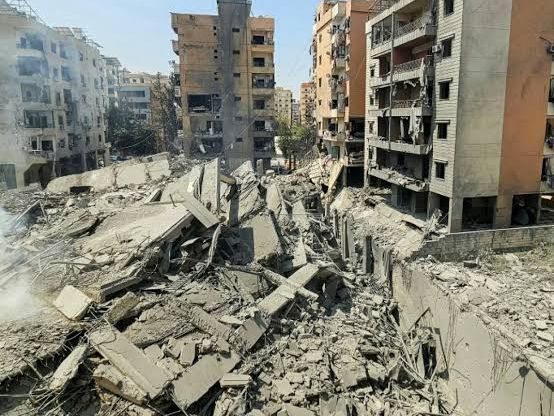
The latest Israel–Hezbollah conflict has inflicted another heavy blow on Lebanon, destroying tens of thousands of homes, damaging infrastructure and further weakening an economy that relies essentially on tourism. Washington reached a regional de-escalation understanding with Iran in April, which Tehran said extended to Lebanon. President Joseph Aoun and Prime Minister Nawaf Salam insisted that any security arrangements involving Lebanon be negotiated exclusively by the Lebanese state through a separate U.S.-mediated channel with Israel.
The scale of destruction has already surpassed that of the 2023–24 conflict, which generated reconstruction needs measured in the billions of dollars. LIMS argues that this time reconstruction cannot rely on the state. With public finances exhausted and sovereign borrowing effectively unavailable, the government lacks the fiscal capacity to finance another large-scale rebuilding effort.
LIMS also warns against resorting to the central bank’s foreign exchange reserves or monetary. Such measures would risk reviving the inflation and exchange-rate instability that culminated in Lebanon’s 2019 financial collapse. LIMS added that gold reserves are protected by law, a safeguard that should be preserved. Lebanon’s unresolved financial losses are a stark reminder of how proceeds from any sale of gold could easily be diverted into waste, inflated procurement and political patronage, permanently eroding national wealth with little lasting economic benefit.
Instead, reconstruction will depend primarily on mobilising private capital that requires restoring credibility on two fronts. Politically, investors are unlikely to commit to long-lived infrastructure assets without confidence that renewed conflict will not destroy them. Economically, Lebanon must dismantle barriers to private investment by opening infrastructure sectors, including electricity, telecommunications, water, waste management, ports and aviation, to competition. Such reforms would enable investments to come, improve efficiency and lower costs.
Lebanon’s reconstruction challenge is therefore not principally one of financing, but of credibility. Without durable security arrangements and market-oriented reforms capable of attracting private investment, the country risks repeating a familiar cycle of destruction followed by incomplete recovery.
- After The Decline In Gold… Patrick Mardini Warns Against Being Drawn Into Speculation. April 15, 2026: Bil Arabei, Article (AR)
- Between Gold And Bitcoin… What Protects The Wealth Of The Lebanese In Times Of Collapse?. April 15, 2026: Aljadeed, Video interview (AR)
- 1,081 Housing Units Destroyed Daily In Lebanon Over 5 Weeks: Figures Reveal The Scale Of Destruction In The Residential Sector. April 16, 2026: Annahar, Article (AR)
- What If Lebanon Reached A Peace Agreement With Israel?!. April 24, 2026: Al Markazia, Article (AR)
- The Economic Cycle Is Moving On Crutches Due To The Israeli Aggression. April 27, 2026: Addiyar, Article (AR)
- War Losses Are Destroying What Remains Of The Tottering Structure: An “Open Bleeding” Economy — Until When?. April 30, 2026: Al Massira, Article (AR)