

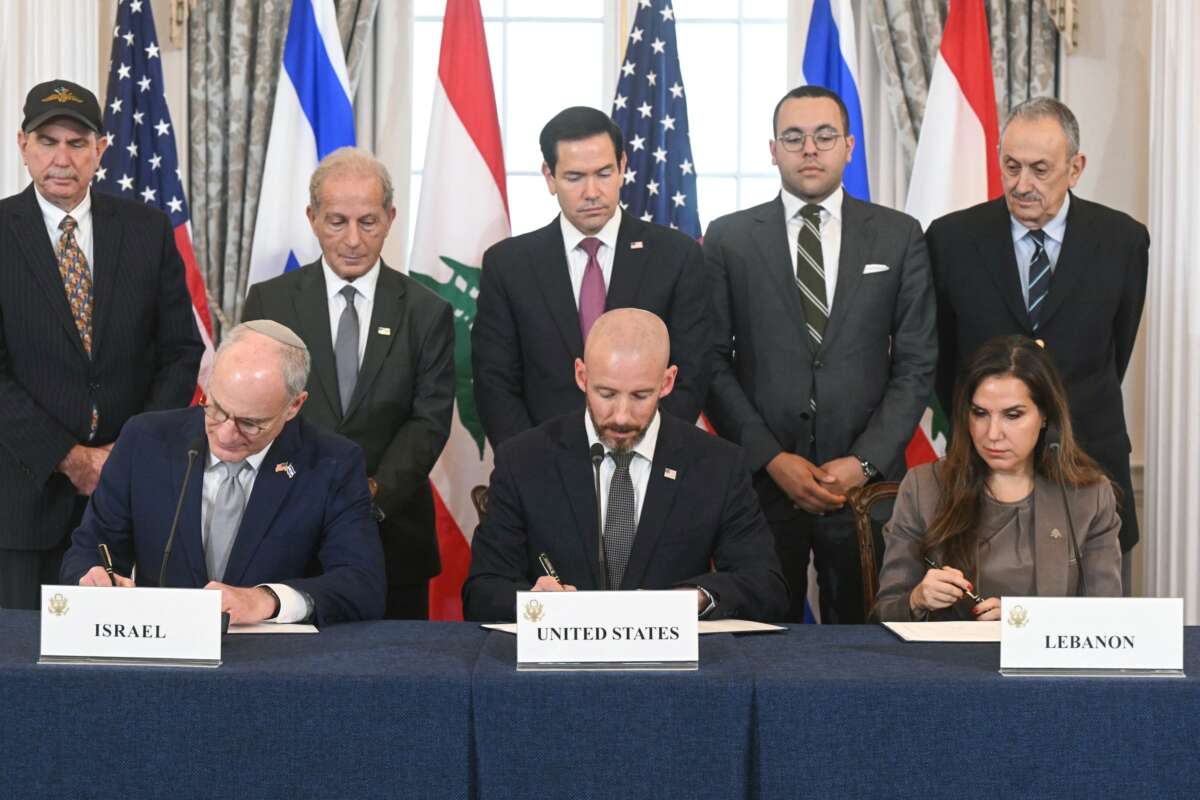
June marked a potentially transformative moment with the signing of a U.S.-brokered trilateral framework between Lebanon, Israel, and the United States. The framework establishes a reciprocal, phased process through which the Lebanese Armed Forces would gradually restore exclusive state authority across Lebanon, alongside the verified disarmament of all non-state armed groups, principally Hezbollah, and the dismantlement of their military infrastructure. In return, Israel would progressively redeploy from Lebanese territory, beginning with agreed “pilot zones” where reconstruction efforts and the return of displaced civilians would follow verified implementation.
More broadly, the framework shifts Lebanon onto a dedicated diplomatic track between Beirut, Washington and Tel Aviv, rather than treating Lebanon primarily as part of wider regional understandings. For this reason, Hezbollah has rejected the framework and prefers to tie its strategic posture to broader regional dynamics involving Iran.
The framework has ignited a sharp debate across Lebanon’s political spectrum. Supporters contend that it would allow the government to reassert state sovereignty over all its territory by dismantling Hezbollah’s military hegemony and obtaining Israel’s withdrawal from occupied territories. They argue it would reduce the risk of renewed hostilities with Israel, attract reconstruction financing, and improve the investment climate through a stronger security posture that restores confidence among international investors and Gulf partners.
Critics say the deal does not mention Israeli withdrawal from Lebanon but talks about re-deployment tied to a nationwide verification of Hezbollah’s disarmament. They claim that this formulation legitimises an illegal occupation and shifts the burden on a Lebanese state that lacks sufficient military, fiscal and administrative capacity to meet its obligations. The process would open the door for Israel to invoke unverified compliance as a pretext for an indefinite presence. Moreover, forcing Hezbollah to disarm could trigger internal conflict and deepen sectarian divisions.
Regardless of these competing interpretations, the framework has shifted the central question facing Lebanon to pilot zones, reconstruction, and the return of regional partners and foreign investment. This aspect will depend not only on security guarantees but also on whether Lebanon can create a credible economic framework. Key reforms such as establishing a currency board to restore monetary credibility, opening important sectors such as electricity and aviation to competition and completing financial sector reforms become more urgent than ever. For Lebanon, the challenge is therefore no longer only rebuilding physical infrastructure, but rebuilding the institutional foundations required for sustainable growth.