

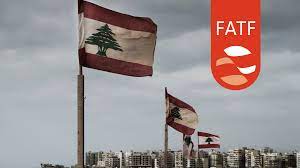
Lebanon’s banking crisis is now in its seventh year, yet the losses accumulated across the banking and financial system remain unresolved. The collapse of bank intermediation has pushed a large share of economic activity into cash, weakening transparency and making it harder for financial institutions and the authorities to establish the origin and movement of funds. Lebanon remains on the Financial Action Task Force’s grey list, which reflects deficiencies not only in its legal framework but, increasingly, in the effectiveness of its implementation.
LIMS has argued that Lebanon already has a substantial anti-money laundering and counter-terrorist financing framework, but investigations, prosecutions, asset recovery and confiscation, beneficial-ownership transparency and coordination between institutions remain inadequate. The FATF has also identified weaknesses in the supervision of designated non-financial businesses and professions, including sectors such as real estate and precious metals.
Bank restructuring and resolution are therefore not technical requirements imposed by international institutions. They are essential to restoring a functioning financial system. A credible resolution framework would allow insolvent banks to be dealt with transparently, move Lebanon away from its cash-based economy as legitimate economic activity moves back into the banking system, and restart credit to the private sector.
The consequences extend well beyond the banking sector. Lebanon has substantial reconstruction and development needs. Reforms are needed to attract international support for reconstruction. In the absence of a credible banking restructuring, international partners have little basis on which to commit large-scale financing.
- Financial Chaos Outside the Banking Sector and Sanctions: Lebanon Pays the Price of Money Laundering. July 2, 2026: Al Arabia, Video interview (AR)
- War and Corruption Keep Lebanon on the “Gray List”. July 5, 2026: CNBC, Video interview (AR)