

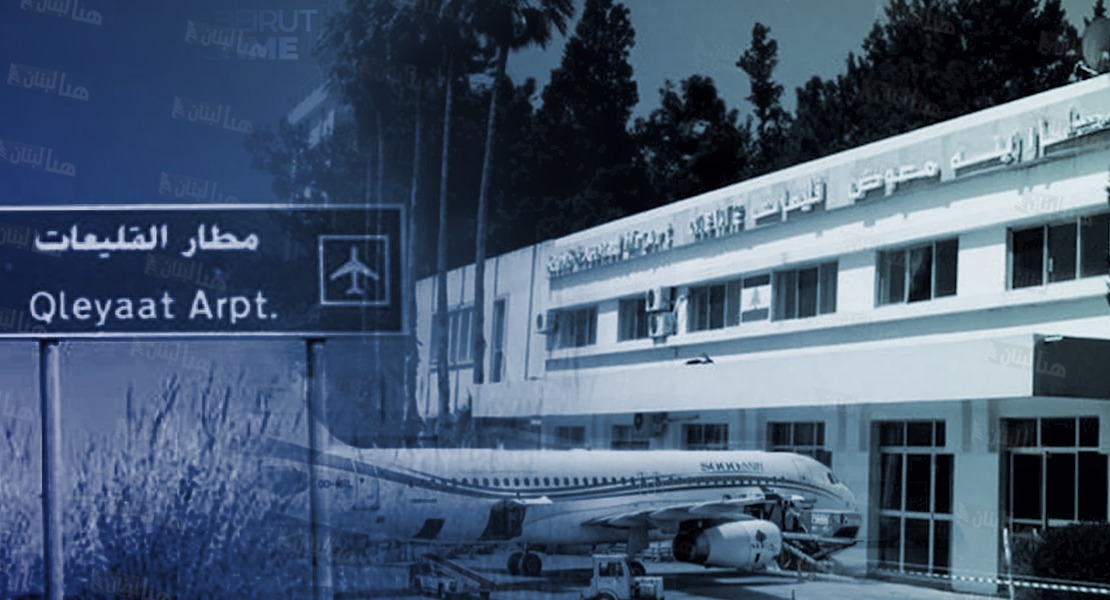
In February 2026, the Lebanese government announced plans to rehabilitate and reopen the civil‑sector facilities at Qulay’at Airport, a project touted as a catalyst for investment in a northern region that has long suffered from under‑investment and high unemployment. The initiative was also a means of diversifying Lebanon’s air transport risk, which currently rests on a single fee‑heavy airport operated by Middle East Airlines (MEA) in Beirut. The announcement gained traction until the war erupted in March 2026, shifting government priorities away from infrastructure projects.
LIMS has repeatedly highlighted the strategic importance and the urgency of a second airport. Airstrikes now target the vicinity of Beirut Airport, and any disruption could isolate Lebanon. Current passenger fares to and from Lebanon rank among the highest in the region, an outcome of MEA and Beirut Airport’s monopolies. The second airport would introduce competition, lower travel costs, improve service quality, and serve as a safety net should Beirut’s runway become unusable.
LIMS proposed a build‑operate‑transfer (BOT) or build‑operate‑own (BOO) model in which a private consortium would finance, refurbish, and run Qulay’at Airport. This approach was initially endorsed by the Nawaf Salam administration. The Ministry of Public Works later pivoted to a government‑direct funding scheme that would hand the project over to MEA, a shift LIMS condemned and ultimately rejected by Salam’s cabinet.
In response, the minister unveiled a counterplan, earmarking $15 million from state coffers for reconstruction while leaving operator selection to an upcoming tender. Hints suggest that MEA might be the sole fit candidate. LIMS maintains that public spending could be better directed elsewhere and that a BOT or BOO arrangement remains the superior path. A private entity, motivated to recover its investment through operation of the airport, would likely ensure timely completion, higher‑quality rehabilitation, and efficient management.
In an environment marked by war and acute dependence on Beirut’s single gateway, the Qulay’at project offers Lebanon a rare opportunity to demonstrate its capacity to attract foreign investment in critical infrastructure. If executed properly, it could deliver tangible economic benefits while providing a vital lifeline should the capital’s airport fall silent.
- Qlayaat Airport: A New Lifeline for the Economy if Managed Correctly February 9, 2026: Aljadeed, Video interview (AR)
- How the Customs Sector Turned into a Black Hole Devouring Lebanon’s Economy February 10, 2026: Daraj Media, Article (AR)
- Traditional Financing of Qlayaat Airport February 17, 2026: Aljadeed, Video interview (AR)
- The Dream of Qlayaat Faces an Existential Challenge: Does Consensual Contracting Hinder the Takeoff Process? February 23, 2026:VDL, Audio interview (AR)
- Beirut: Drums of War Are Beating at the Gates of the Airport and the Port February 27, 2026: Alhurra, Article (AR)