

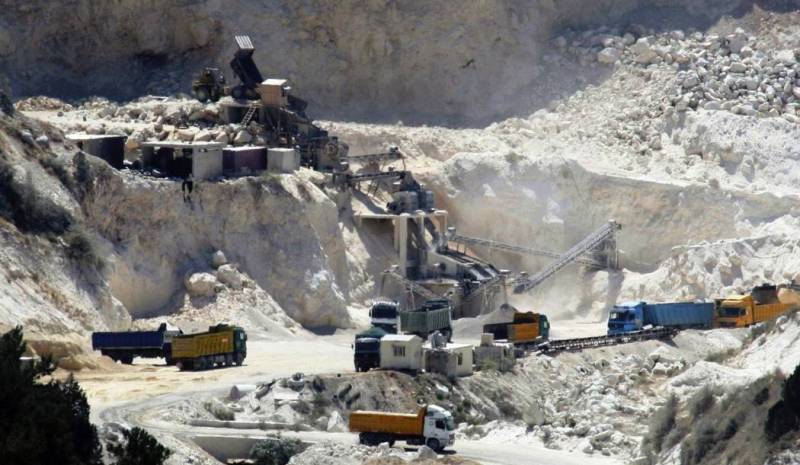
Lebanon’s government announced moving to collect long-outstanding fees, fines and taxes from quarry and crusher operators, issuing an initial batch of collection orders worth about $1bn. A government study published in 2023, based on a field survey of 1,235 sites, put total dues owed to the state between 2007 and 2018 at $2.4bn, encompassing unpaid taxes, remediation costs and penalties.
LIMS notes the sector operates in conditions close to monopoly. Imports of cement and gravel are restricted, giving domestic operators substantial pricing power and leaving consumers with few alternatives. The result is higher construction costs of essential building materials. Therefore, enforcement in the current market conditions would simply translate into higher prices for households and firms.
Efforts to recover public revenues, LIMS concludes, must be accompanied by reforms that open the market to imports of cement, gravel and other construction inputs. Greater competition would limit operators’ ability to pass the full cost of compliance onto consumers. Relaxing trade restrictions would also help stabilise prices and improve market discipline, allowing the construction sector, a key source of employment and economic activity, to benefit from lower input costs and more competitive practices.
- Finance Begins Collecting Fines On Quarries Worth A Total Of 2.4 Billion Dollars, November 28, 2025: Nida El-Watan, Article (AR)